
by Reuters
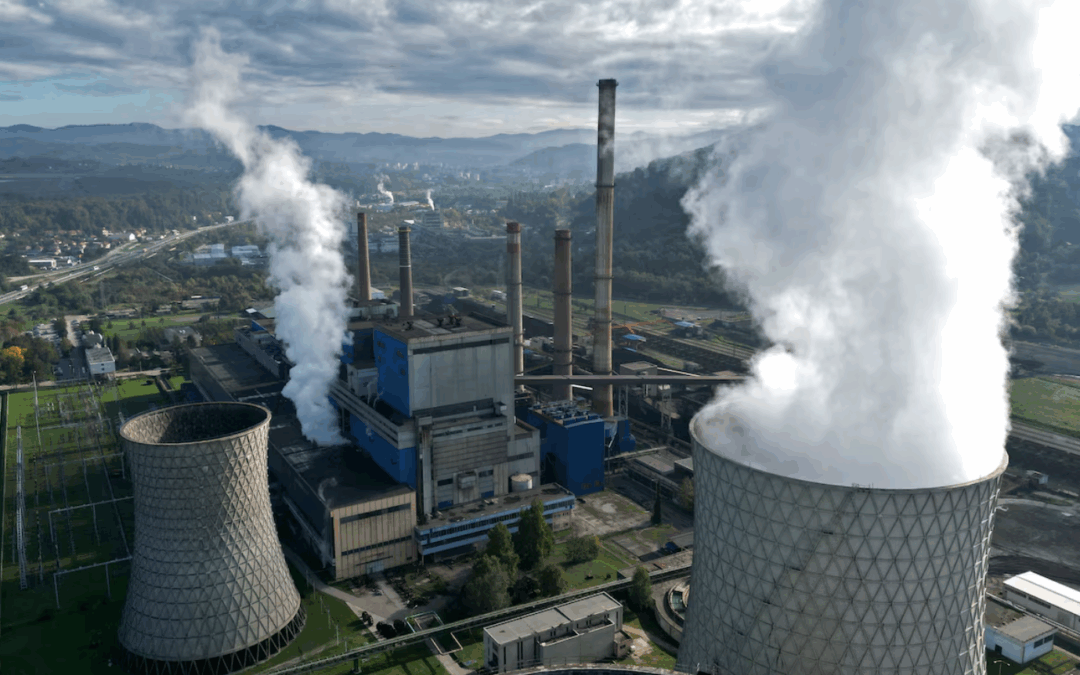
As the European Union’s Carbon Border Adjustment Mechanism (CBAM) nears full implementation on January 1, 2026, pressure is mounting on non-EU countries, particularly in the Western Balkans, to adopt domestic carbon pricing. A recent report from the CEE Bankwatch Network warns that without internal carbon measures, countries such as Bosnia and Herzegovina, Montenegro, North Macedonia, and Serbia could face severe economic consequences. The CBAM will require EU importers to pay for the embedded carbon emissions in goods such as electricity produced outside the bloc. For the Western Balkan region, where up to 60% of electricity exports to the EU are coal-based, this regulation poses a serious threat to export revenues and energy sector stability.
The report suggests that Western Balkan governments can mitigate these impacts by implementing national carbon pricing schemes. Doing so would not only shield them from the full brunt of CBAM taxes but also generate up to €4.2 billion annually to fund a just and sustainable energy transition. Pippa Gallop of the CEE Bankwatch Network stated that CBAM could be a catalyst for long-overdue reforms, encouraging governments to phase out highly polluting and increasingly uneconomic coal plants. Moreover, countries showing “substantial progress” toward aligning with EU climate laws could qualify for exemptions under the CBAM framework.
FACS Perspective
The introduction of CBAM marks a turning point in the EU’s external climate policy. While intended to prevent carbon leakage, the mechanism also places a premium on carbon transparency and accountability for non-EU exporters. For Western Balkan economies that are deeply intertwined with the EU market, the transition to a carbon-priced electricity system is not just advisable, it is imperative.
At FACS, we believe that early adoption of carbon pricing will not only align the Western Balkans with EU climate frameworks but also provide the financial tools to reinvest in cleaner infrastructure and future-proof the region’s energy sector. As regulatory pressure increases, carbon markets are becoming central to both compliance and competitiveness.
This post is based on reporting by Reuters. All rights, including copyright, belong to the original author.