
Based on reporting by Neha Arora
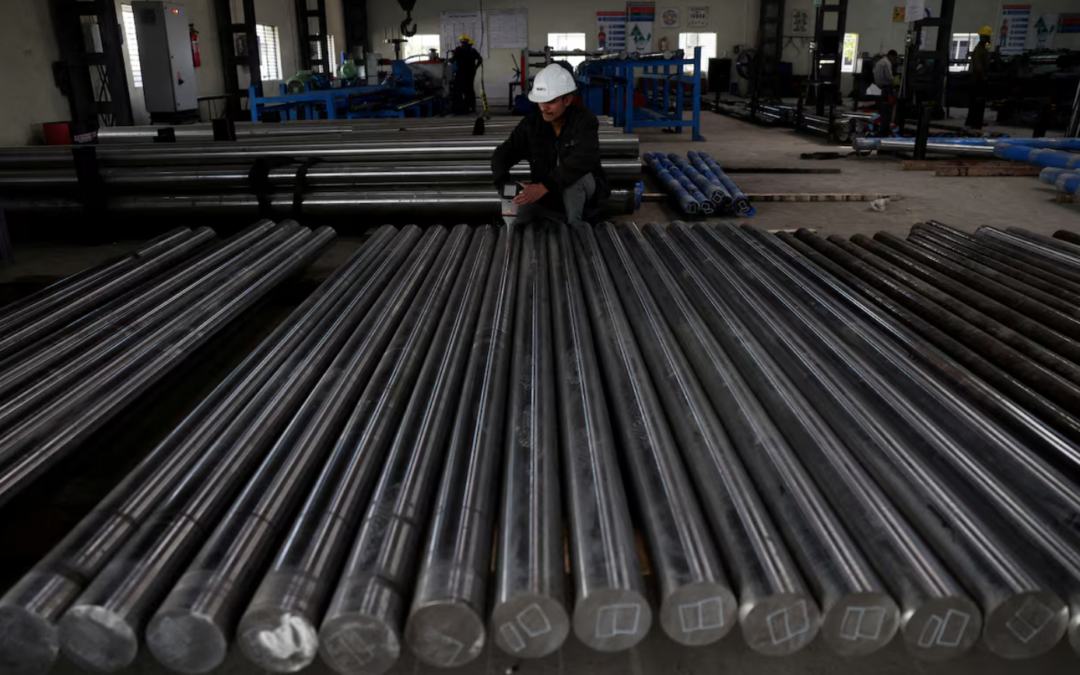
India announced it will support its steel industry as exports to Europe are expected to decline following the introduction of the EU’s Carbon Border Adjustment Mechanism (CBAM). Despite a recent EU-India trade agreement reducing tariffs across several sectors, CBAM remains fully in place, introducing a carbon cost on imported steel, cement, and other emissions-intensive goods entering the European market. Indian steel producers currently ship roughly two-thirds of their exports to Europe, and the policy is already prompting companies to seek alternative markets in Africa and the Middle East. Government officials acknowledged that CBAM, combined with quotas and other trade measures, will materially affect export competitiveness and require policy intervention to support domestic industry.
The development illustrates that CBAM is functioning not merely as an environmental regulation but as a structural trade mechanism. By attaching a carbon cost to production intensity, the framework alters comparative advantage across jurisdictions, effectively integrating climate policy into international market access conditions. Even before the definitive financial settlement phase begins, market participants are adjusting sourcing strategies, trade routes, and investment decisions in anticipation of persistent carbon-adjusted pricing.
FACS Perspective
CBAM marks a transition from regional emissions regulation to globally transmitted carbon pricing signals. The mechanism shifts carbon from an operational compliance cost within Europe to a supply-chain competitiveness factor affecting producers worldwide.
At FACS, we view this as reinforcing the need for embedded emissions transparency, procurement exposure analysis, and forward-looking cost modelling across supply chains. As CBAM enters its definitive phase, companies will need to evaluate suppliers not only on price and reliability but also on carbon intensity and regulatory exposure.
Carbon pricing is therefore evolving from a compliance obligation into a strategic trade variable. Organisations that incorporate carbon exposure into sourcing and contracting decisions early will be better positioned in an environment where market access increasingly depends on emissions performance.
You can read the full Reuters article here.
This article is based on publicly available reporting. All rights, including copyright, remain with the original source.